
Blog
Fireworks at Home This November: Safety, Curfews and Being a Good Neighbour
10 October 2026
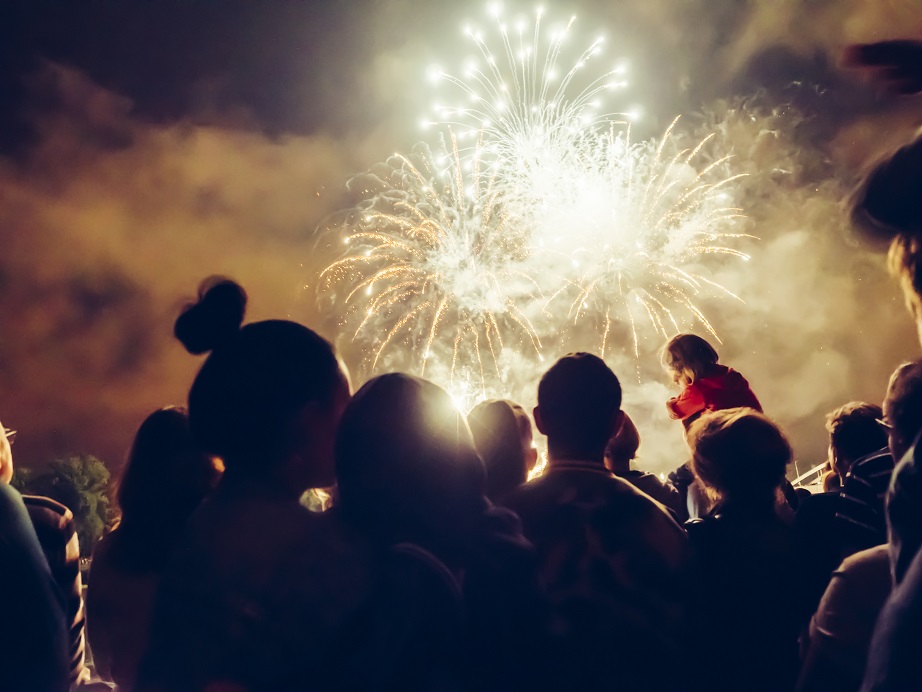
November is the busiest month of the year for fireworks. Bonfire Night falls on Thursday 5 November this year, Diwali follows on Sunday 8 November, and thousands of families will be setting off fireworks in their own back gardens in the weeks around them.
We are a professional display company, so most of our November is spent firing public and private displays across Berkshire, Buckinghamshire and Oxfordshire. But we love fireworks in every form, and we want garden fireworks to stay a normal, legal part of British life. Whether they do is now down to how all of us use them.
This is our guide to doing it safely, legally and in a way that keeps your neighbours on side.
Your neighbours cannot stop you, but they are why this matters
Let's start with the question we are asked most often. If you are setting off fireworks on your own property and within the law, your neighbours have no legal power to stop you. There is no requirement to ask anyone's permission. (If you rent, check your tenancy agreement, which may have rules of its own.)
That is the law. Being considerate is something else, and it is the part that decides how fireworks are seen. The people living around you may have a dog that panics at the first bang, horses in the next field, a baby who has just gone down, an elderly parent, or someone for whom sudden explosions bring back memories they would rather not relive. None of them can stop you. All of them will remember how you went about it.
The industry guidance that professional display companies work to says neighbours should be informed. Not asked for permission, simply given the chance to prepare. The same courtesy belongs in every back garden.
Tell your neighbours before you light anything
A few minutes of notice makes an enormous difference. Pet owners can bring animals inside, close the curtains and put the radio on. Horse owners can bring horses in or stay with them. Parents can plan bedtime around it. Nobody is caught off guard.
For more on animals and fireworks, including links to training resources for nervous pets, see our article on fireworks and animal welfare.
Respect the curfew, and finish well before it
In England and Wales it is against the law to set off fireworks between 11pm and 7am. There are four exceptions:
One detail catches people out every year. The midnight extension applies to 5 November itself, not to the Bonfire Night weekend. This year the 5th is a Thursday, so if your party is on Saturday 7 November, the normal 11pm curfew applies.
The curfew is also a legal limit, not a target. Bonfire Night is a school night this year. An early evening display, finished by 8 or 9pm, will be enjoyed by your own children and resented by nobody. A barrage at ten to eleven will be remembered for all the wrong reasons.
Breaking the curfew, or using fireworks illegally in other ways, can bring an unlimited fine and up to six months in prison, and the police can also issue an on-the-spot fine of £90. The GOV.UK fireworks law page sets out the rules in full.
Safety distances apply to your neighbours too
Every firework sold to the public carries a minimum safety distance on its label, and those distances are not suggestions. As a rule of thumb:
Here is the part most people miss. That distance is not just from where your own family is standing. It applies in every direction, to everyone and everything around the firework: your neighbours in their own gardens, their houses and windows, their cars on the drive, their sheds, fences and trees. If the label says 25 metres and your neighbour's conservatory is 12 metres away, that firework is not suitable for your garden, however much room there seems to be from the patio.
A few more things to check before the night:
The morning after, check your own garden and ask your neighbours whether any debris has landed on their side. Offering to clear it up costs nothing and is remembered.
Be responsible on the night
The Firework Code exists for good reason. The basics:
Remember the rules on age and place too. It is illegal for under 18s to buy adult fireworks, and it is illegal for anyone to set off or throw fireworks, including sparklers, in the street or any other public place. A park, a village green or a car park is not your back garden.
If you are unsure, ask your fireworks supplier
A good fireworks shop is the best safety resource most people never use. The staff handle these products every day, and they will happily tell you which fireworks suit a small garden, what safety distance each one needs, which are quieter and which are loud, and how to set them up so they cannot topple.
So if you are unsure about anything, from how far back to stand to whether a particular product is right for your space, ask before you buy rather than on the night. Tell them how big your garden is and how close the nearest houses are. If a seller cannot or will not answer those questions, buy from one who can.
If noise is a concern on your street, ask specifically about lower noise products. There is more to it than the label suggests, and our guide to low-noise fireworks, myth versus reality explains what to expect.
Irresponsible use is how fireworks get banned
This is the part we would ask every reader to take seriously.
Fireworks are not guaranteed to stay on sale to the public. Petitions calling for a ban on public sales have repeatedly gathered hundreds of thousands of signatures and been debated in Parliament. In Scotland the law has already changed: the public can now only use fireworks on set days around traditional celebrations, and councils can create firework control zones where they cannot be used at all.
Most recently, the Government's public consultation on fireworks and pyrotechnics, run by the Office for Product Safety and Standards, opened on 16 July and closed on 7 October. Its headline proposal is to cut the maximum noise level for consumer fireworks from 120 decibels to 110, which roughly halves how loud they sound, and it asked whether the limit should go further still, to 100 or even 90 decibels. The Government estimates that a 110 decibel limit alone would affect around a third of the consumer fireworks on sale today. It also proposes adding more products to the list already banned from sale to the public.
Two things in that consultation are worth reading carefully. The first is the reason behind it. The Government identifies the key harms as those that come from misuse, namely noise and antisocial behaviour, and points to disruptive and criminal misuse around Halloween and Bonfire Night. Its own polling found 91% of people supported some form of regulatory change. The problem, in other words, is not fireworks. It is how some people use them.
The second is what it does not propose. The Government says a ban on the public buying or using fireworks would not be “a proportionate response to the current situation.” Professional displays are left alone too, keeping their full range of effects.
The current situation is the whole point. A ban is off the table today because most people use fireworks safely and considerately. Every rocket fired at 2am, every banger thrown in a street and every dog terrified by fireworks nobody warned anyone about makes the case for the next consultation to go further. If irresponsible use carries on, garden fireworks will end up banned, and the responsible majority will lose them along with the people who caused the problem.
None of this changes the law for this November. The consultation has only just closed, the Government has yet to publish its response, and any change would need new regulations followed by a transition period. But the direction of travel is clear, and the best argument for keeping fireworks is a safe, considerate, well-run Bonfire Night on every street.
Or leave it to the professionals
If your garden is too small for the fireworks you have in mind, or you would simply rather enjoy the evening than run it, there are good alternatives. Most towns and villages have an organised public display, which is the safest and most neighbour-friendly way to see fireworks in November. And if you would like a show of your own for a party, an anniversary or a family celebration, we design and fire private displays and Bonfire Night displays with the site survey, risk assessment and insurance all handled for you.
Whatever you choose, have a safe and happy November. If you have a question about any of the above, get in touch and we will do our best to help.